
Manufacturing companies face mounting pressure to optimize research and development spending while accelerating innovation cycles. Selecting optimal research themes from vast technology options within limited time and resources remains extraordinarily challenging. Traditional methods requiring over a year for theme exploration create competitive disadvantages as markets evolve rapidly. We address these critical challenges through AI-powered research and development consulting services that compress theme identification timelines to several months while examining exponentially more possibilities, enabling data-driven investment decisions that maximize returns and minimize risk.
Manufacturing Industry R&D Challenges and the Need for Strategic Innovation Support
Theme Exploration Challenges in Manufacturing R&D Investment Decisions

Manufacturing businesses invest substantial resources in research and development activities, yet struggle to identify themes that will drive future growth. The complexity of evaluating thousands of potential technology paths overwhelms conventional approaches relying on expert intuition and limited market analysis. Time consuming processes extending beyond twelve months delay strategic decisions while competitors advance their development efforts.
Balancing application-oriented development with long-term innovation strategies creates persistent tension within research departments. Pressure for immediate profit drives focus toward incremental improvements, while basic research and scientific research receive insufficient investment despite potential for transformative competitive advantage. Traditional research and development spending decisions reflect organizational politics as much as strategic opportunity assessment.
Limited data availability compounds investment uncertainty across all industry sectors. Published research reveals what competitors accomplished years ago but provides little insight into current development direction. Expert interviews and trade show interactions offer valuable perspectives yet cover limited scope and introduce selection bias that skews understanding of true market potential.
The Gap Between Technology Seeds and Market Needs

Even when companies successfully develop promising technologies, identifying specific market applications remains extraordinarily difficult. Research departments excel at advancing scientific understanding but often lack direct connection to customer problems and market dynamics. This disconnect between technical capability and validated needs fundamentally reduces commercialization success rates across manufacturing sectors.
On-site problem identification without revealing development direction to potential customers or competitors presents acute challenges. Traditional needs exploration requires direct customer engagement, creating tension between gathering necessary market intelligence and maintaining confidential research initiatives. Companies proceed with significant technological development investment based on untested assumptions about market demand.
The challenge intensifies for basic research exploring fundamentally new capabilities without obvious immediate applications. Researchers may recognize technical significance yet struggle to articulate compelling value propositions that resonate with businesses and customers. Understanding true market needs requires penetrating multiple value chain layers, a time consuming process that many organizations execute poorly.
Commercialization Barriers from R&D to Market Launch
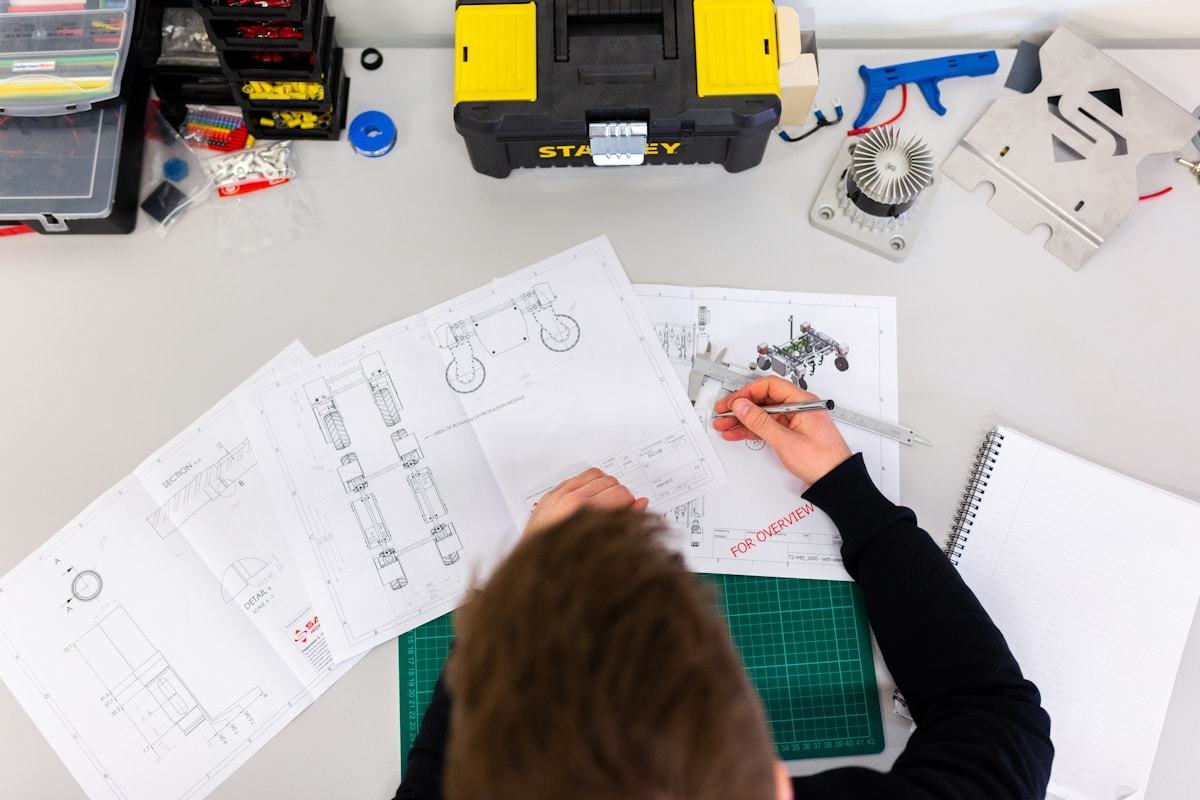
Low success rates in translating research results to commercial products reflect systemic challenges in organizational processes and cross-departmental collaboration. The first stage barrier involves transitioning from research to development, requiring fundamental shifts in mindset and success criteria that many companies struggle to navigate effectively. Quality and performance enhancement while ensuring mass production suitability presents another critical obstacle.
Technologies functioning reliably in controlled laboratory conditions often encounter unexpected issues during scale-up to production volumes. Materials behave differently at commercial scale, process variations become critical quality issues, and costs that seemed reasonable for prototypes prove prohibitive for production. Manufacturing businesses frequently underestimate this transition complexity, treating scale-up as straightforward engineering rather than fundamental development challenge.
Successful commercialization requires seamless coordination among research, development, manufacturing, quality, marketing, and sales functions with different priorities and organizational cultures. Information flows poorly across these boundaries while decisions made in one department create unintended consequences for others. Project management approaches that work within individual functions often prove inadequate for complex, cross-functional innovation initiatives.
ConnectaBlue’s R&D Consulting Service Portfolio
R&D Theme Exploration: AI-Powered Large-Scale Research Theme Identification

Selection of research themes that will drive next-generation growth represents critical decisions affecting corporate future competitiveness. However, identifying optimal themes from vast technology options within limited time and resources remains extraordinarily challenging using conventional approaches. We utilize proprietary AI tools and specialized knowledge to realize large-scale and high-precision theme exploration that was difficult with traditional methods.
We systematically extract thousands of research theme candidates from wide-ranging industries and fields, then conduct advanced AI-based verification from multiple perspectives including marketability, technical feasibility, and competitive advantage. Our technologies compress processes requiring over a year to several months while examining exponentially more possibilities. This acceleration provides companies with crucial competitive advantage, enabling faster response to emerging opportunities and market shifts.
The systematic nature of our approach reduces bias and blind spots inherent in human-driven theme selection. Our AI tools analyze vast data quantities including patent filings, scientific research publications, market trends, competitive activities, and technology trajectories to identify promising themes that might escape notice through conventional research methods. This comprehensive coverage ensures businesses consider the full opportunity space rather than limiting exploration to familiar domains.

We develop multi-dimensional evaluation frameworks assessing each candidate theme across critical success factors. Technical feasibility analysis examines whether science and engineering foundations exist to support successful development. Market potential assessment evaluates addressable market size, growth trajectories, and customer willingness to adopt new products and services. Competitive advantage evaluation determines whether themes offer differentiation opportunities.
Our AI tools excel at identifying non-obvious connections between seemingly disparate technologies and market needs. By analyzing patterns across industries and applications, we surface opportunities for cross-sector technology transfer and novel applications that create new market categories. This capability proves particularly valuable for manufacturing companies seeking breakthrough innovation rather than incremental improvements.
The output of our theme exploration process provides strategic clarity for investment decisions. Rather than vague directional guidance, we deliver specific, prioritized recommendations supported by comprehensive data and analysis. Companies gain confidence that research and development spending flows toward initiatives with genuine potential rather than reflecting organizational politics or unexamined assumptions.
R&D Needs and Application Exploration: Market-Driven Technology Development

Many companies express concerns about wanting to understand specific market needs in research and development theme selection, or not knowing potential customers for newly developed technologies. This uncertainty creates hesitation that delays investment and allows competitors to capture emerging opportunities. We address this challenge through services combining AI-powered theme extraction with advanced digital marketing methods.
We extract large quantities of research themes using AI, estimate future marketability and commercialization probability, then leverage latest digital marketing methods to identify potential customer needs and conduct high-resolution verification of research theme validity. This approach clarifies research and development direction through data-driven methodology without disclosing customer information externally, realizing shortened time to market and improved success probability.
Our digital marketing-based needs exploration represents fundamental innovation in how manufacturing businesses validate market opportunities. Traditional approaches rely on direct customer engagement through interviews, surveys, or trade show interactions requiring revelation of development direction and providing limited statistical validity. We employ sophisticated digital techniques that identify and engage potential customers anonymously, gathering quantitative data on needs, preferences, and willingness to adopt new products.
The scale and precision of our data collection far exceeds what conventional methods achieve. Where traditional market research might interview dozens of potential customers, our digital approaches engage thousands, providing statistical confidence that qualitative methods cannot match. This quantitative foundation supports more confident investment decisions and reduces risk of pursuing themes with limited actual market demand.
We apply advanced analysis to identify patterns in customer needs that surface opportunities for innovation. By analyzing how different customer segments articulate problems and evaluate solutions, we uncover unmet needs that companies can address through technological development. This understanding guides not just theme selection but also product positioning and go-to-market strategy development.
Our approach proves particularly effective for exploring applications of existing technologies in new markets. Manufacturing companies often possess technical capabilities with broader applicability than current products exploit. We systematically identify adjacent markets and alternative applications where these capabilities could create value, then validate demand and competitive dynamics to assess commercial viability through our proprietary methods.
R&D Organization Strengthening for Commercialization Promotion
Many companies advocate streamlining processes from research and development to commercialization and speedy business creation, but few businesses have effectively incorporated these concepts into organizational mechanisms. The gap between aspiration and execution reflects systemic challenges in organizational design, performance management, and cross-departmental collaboration that impede innovation outcomes.
We comprehensively support construction of commercialization promotion processes in BtoB company research and development departments. Through KPI design according to each stage from technology development to market launch, optimization of stage-gate management processes, and mechanism building for strengthening cross-departmental collaboration, we significantly improve commercialization success rates of research results.
Our approach begins with comprehensive assessment of current organizational capabilities and processes. We examine how research initiatives progress from concept through commercialization, identifying bottlenecks, inefficiencies, and structural impediments that prevent effective execution. This diagnostic phase provides foundation for targeted interventions addressing root causes rather than symptoms.
We design stage-gate management systems tailored to manufacturing industry characteristics and specific company contexts. Generic stage-gate processes often prove either too rigid, creating bureaucratic delays, or too permissive, failing to provide necessary governance. Our customized frameworks balance discipline with flexibility, ensuring appropriate review and decision-making without impeding project momentum.
Each stage requires distinct capabilities, metrics, and decision criteria aligned with development phase objectives. Early research phases emphasize technical feasibility and scientific validity, while later development stages focus increasingly on manufacturing scalability, cost targets, and market readiness. We develop stage-specific KPIs that guide teams toward appropriate objectives and enable leadership to assess progress accurately.
Cross-functional collaboration mechanisms represent another critical element of our organizational support services. We create structures and processes that facilitate seamless information flow and decision-making across research, development, manufacturing, marketing, and commercial functions. This includes defining clear roles and responsibilities, establishing communication protocols, and implementing collaborative tools and practices that overcome traditional departmental silos.
ConnectaBlue’s Approach to Manufacturing Industry R&D Challenges
High-Resolution Theme Exploration Through AI and Digital Marketing Integration
We provide unique solutions by combining proprietary AI tools, web data, and digital marketing methods that transform how manufacturing businesses approach research and development theme exploration. This integration enables deeper estimation and verification of market needs, marketability, and competitiveness at higher resolution than think tank reports and across wider scope than trade shows or expert interviews.
Our proprietary AI tools analyze vast datasets spanning patent filings, scientific publications, market trends, competitive activities, and technology trajectories to identify promising research themes systematically. This comprehensive data analysis uncovers opportunities that conventional approaches overlook, including non-obvious connections between disparate technologies and emerging market needs across multiple industry sectors.
Digital marketing methodologies complement AI-powered analysis by enabling direct market validation without revealing corporate development direction. We engage thousands of potential customers anonymously to gather quantitative data on needs, preferences, and adoption willingness. This approach provides statistical confidence that qualitative research methods cannot achieve while maintaining crucial confidentiality during early research phases.
The integration of AI tools and digital marketing creates synergistic benefits that accelerate innovation cycles substantially. AI identifies candidate themes and estimates technical feasibility, while digital marketing validates market demand and competitive positioning. This combination reduces time consuming exploration processes from over twelve months to several months, enabling companies to stay ahead of rapidly evolving market conditions.
We generate actionable insights that support confident investment decisions across the research and development portfolio. Our analysis quantifies market opportunity size, growth trajectories, competitive intensity, and technical risk for each candidate theme. This data-driven foundation enables strategic resource allocation toward initiatives with highest potential returns while managing overall portfolio risk effectively.
Our approach proves particularly valuable for identifying cost reduction technology opportunities and breakthrough innovations that create new market categories. By analyzing patterns across industries, we surface opportunities for cross-sector technology transfer where capabilities developed for one application find valuable uses in entirely different contexts, maximizing return on research and development spending.
Anonymous Information Gathering and Needs Analysis Methodology
We explore needs and potential customers for research and development seeds based on proprietary methods and data without disclosing customer information to external parties. This capability addresses one of the most significant challenges manufacturing companies face: validating market opportunities while maintaining confidential research initiatives that represent competitive advantage.
Even in upstream phases such as research ideas before seed development or theme selection stages, we conduct high-resolution quantitative information gathering and analysis while ensuring complete anonymity. This makes our services applicable to formulation of medium-to-long-term technology strategies and competitive analysis without revealing corporate research and development direction to competitors or potential customers.
Our anonymous needs exploration methodology employs sophisticated digital techniques that identify and engage potential customers without direct disclosure of specific technologies or development projects. We gather data on customer challenges, unmet needs, and solution preferences through carefully designed digital interactions that maintain confidentiality while generating statistically valid insights.
The ability to conduct market validation during early research phases transforms investment decision-making. Companies can assess market potential and refine development direction based on actual customer data rather than assumptions and expert opinions. This early validation reduces risk of pursuing themes with limited commercial viability while costs of course correction remain relatively modest.
Our approach enables exploration of sensitive strategic questions that companies hesitate to investigate through traditional methods. These include assessing market receptivity to disruptive innovations, evaluating customer willingness to switch from established solutions, and understanding competitive vulnerabilities that new technologies might exploit. The anonymity our methods provide allows frank exploration of these strategic issues.
We apply advanced analytics to the data gathered through anonymous channels to extract actionable insights about market needs and competitive dynamics. Pattern recognition algorithms identify common themes across customer responses, segment analysis reveals how needs vary across different customer types, and predictive modeling estimates adoption curves for new products and services under various scenarios.
Commercialization-Oriented Process Design and Implementation Support
We provide stage-gate management tailored to manufacturing industry characteristics, recognizing that effective commercialization processes must reflect sector-specific realities. Chemical companies face different challenges than machinery manufacturers, and materials businesses operate under different constraints than electronics producers. Our frameworks account for these variations while maintaining consistent governance principles.
KPI frameworks we develop balance innovation creation capability and profitability, addressing the fundamental tension between exploration and exploitation that manufacturing businesses must navigate. Early-stage metrics emphasize learning velocity and technical milestone achievement, while later stages focus increasingly on commercial readiness, production scalability, and financial returns.
Our practical mechanisms draw on abundant industry experience supporting research and development organizations across diverse manufacturing sectors. We understand the specific organizational challenges that companies face in transitioning technologies from laboratory to production, and design processes that address these realities rather than imposing theoretical ideals that prove impractical in actual operations.
We establish sustainable
Three Distinctive Features of ConnectaBlue’s R&D Consulting
Proprietary AI Tools and Digital Marketing-Based High-Resolution Analysis
We provide unique solutions by combining proprietary AI tools, web data, and digital marketing methods to deliver insights that traditional consulting approaches cannot match. This integration enables superior depth and scope compared to conventional think tank reports and expert interviews, allowing us to explore market needs and competitive landscapes with unprecedented precision. Our data-driven innovation approach accelerates investment decision-making by providing quantitative theme exploration and needs analysis at resolution levels previously unattainable in research and development activities.
The technologies we employ process vast datasets spanning scientific research publications, patent filings, and market intelligence to identify emerging opportunities. Our AI-based systems assess technical feasibility, estimate commercialization probability, and predict market receptivity across thousands of potential research themes simultaneously. This capability proves particularly valuable for manufacturing businesses evaluating strategic innovation investments where time consuming conventional methods would delay critical decisions.
Confidential Needs Exploration Without External Information Disclosure
We explore needs and potential customers for research and development seeds based on proprietary methods and data without disclosing customer information externally. This methodology protects client confidentiality throughout the process while delivering high-resolution market intelligence that guides strategic decisions. Even in upstream phases such as research ideas before seed development or theme selection, we conduct quantitative analysis while ensuring complete anonymity for competitive advantage.
Our approach enables technology strategy formulation without revealing corporate research and development direction to competitors or potential partners. Manufacturing companies can assess market opportunities, identify customer segments, and validate application concepts while maintaining confidentiality around their technological capabilities. This anonymous information gathering proves crucial for businesses developing proprietary materials, processes, or innovations where early disclosure could undermine competitive positioning.
Extensive Track Record in Chemical, Materials, and Industrial Manufacturing
We have numerous research and development support achievements in chemical manufacturers, machinery producers, and electronic component companies across diverse manufacturing sectors. Our experience spans basic research strategy through commercialization support, addressing challenges specific to industries where long development cycles and complex technical requirements demand specialized expertise. This extensive track record enables us to understand industry-specific constraints around materials selection, production scalability, and quality requirements that affect innovation success.
In fields where industry-specific technical terms and specialized knowledge have traditionally been entry barriers, we effectively utilize AI based on proprietary tools and know-how to overcome expertise walls. Our systems deliver high-precision analysis in short periods despite specialized knowledge requirements, enabling rapid assessment of research opportunities in advanced materials, functional components, and process technologies. We handle strategic design considering long-term nature of research and development cycles and lead time to market launch, consistently creating results across chemical, electronics, automotive, and industrial equipment sectors.
R&D Consulting Case Studies Across Manufacturing Sectors
Chemical and Materials Industry: New Material Development and Application Exploration
We introduced data-driven research methodology to a chemical industry research institute, shortening candidate substance evaluation period by 30 percent through systematic prioritization and AI-assisted screening. This approach enabled researchers to focus resources on the most promising compounds while eliminating time consuming evaluation of low-probability candidates. The accelerated development process improved research productivity while maintaining scientific rigor and quality standards.
For a textile industry client, we established functional fiber research and development structure that commercialized three new materials in 24 months. Our support included market needs analysis, application exploration, and commercialization process design that aligned research activities with customer requirements. By implementing stage-gate management and cross-departmental collaboration mechanisms, we enabled rapid progression from laboratory development to market-ready products that addressed specific industry challenges.
We supported new application exploration for a building materials manufacturer’s proprietary technology, identifying industrial applications beyond traditional construction markets. Through anonymous needs analysis and digital marketing-based market validation, we discovered untapped sectors where the materials offered unique performance advantages. This exploration generated new revenue opportunities and expanded the company’s addressable market without requiring disclosure of technological details to potential competitors.
Machinery and Electronics Manufacturing: Development Process Optimization
We introduced agile development methodology to a manufacturing company’s research and development department, reducing product development period by 30 percent through iterative processes and parallel workflows. The new approach replaced sequential development stages with concurrent activities that accelerated learning and reduced time to market. Cross-functional teams collaborated from project inception, ensuring that manufacturing constraints informed design decisions and quality requirements were built in rather than inspected later.
For an industrial machinery manufacturer, we introduced digital twin-based development methodology that reduced testing man-hours by 40 percent. Virtual simulation and modeling enabled engineers to evaluate design alternatives and predict performance before building physical prototypes. This approach compressed development cycles while improving final product quality through more comprehensive exploration of design space and early identification of potential issues.
We supported next-generation semiconductor technology roadmap formulation and research and development structure strengthening for a semiconductor industry client. Our work included competitive analysis, technology trend assessment, and strategic planning that aligned research investments with anticipated market evolution. We designed governance processes and performance metrics that balanced innovation creation with profitability objectives, enabling disciplined resource allocation across the research portfolio.
Cross-Industry Technology Transfer and Commercialization Success
We supported new indication exploration and marketability assessment for a pharmaceutical manufacturer’s drug discovery technology, identifying therapeutic areas where existing research could generate additional value. Our analysis evaluated market size, competitive intensity, regulatory pathways, and commercialization probability across multiple indications. This strategic assessment enabled informed decisions about research investment priorities and partnership opportunities that maximized the technology’s commercial potential.
For an aerospace company, we supported application development in automotive and industrial equipment fields leveraging lightweighting and high-strength technology originally developed for aviation applications. Our cross-industry technology transfer approach identified sectors facing similar technical challenges where aerospace innovations could create competitive advantages. Through needs exploration and customer validation, we confirmed market interest and guided adaptation of technologies for new applications with different performance requirements and cost constraints.
We supported application exploration into food and cosmetics fields for a biotechnology company’s core technology initially developed for different purposes. Our market analysis revealed consumer trends and regulatory environments in target sectors, while digital marketing methods validated interest among potential customers and partners. This exploration opened new business opportunities that diversified revenue streams and leveraged existing research investments across multiple commercial applications.
ConnectaBlue Company Profile and Service Inquiry
ConnectaBlue’s Consulting Expertise and Global Network
We are a consulting firm comprised of professionals from top consulting firms with a global network of over 500 consultants, enabling comprehensive support across all industries and themes. Our team delivers unique results and experiential value through exceptional individual capabilities combined with proprietary data and approaches that differentiate our services. Leveraging AI tools and digital marketing methodologies, we excel in BtoB marketing, new business development, ERP implementation, and research and development support to accelerate clients’ business growth.
Our expertise in manufacturing innovation stems from extensive experience supporting chemical manufacturers, materials producers, machinery companies, and electronics businesses facing complex technological development challenges. We understand the strategic importance of research and development spending decisions and the need to balance immediate profit requirements with long-term innovation investments. This understanding informs our approach to theme exploration, needs analysis, and commercialization support that addresses real challenges manufacturing businesses face.
Manufacturing Industry R&D Support Track Record and Client Evaluation
We provide consulting support to clients across a wide range of industries and scales, from companies with sales of 10 billion yen to those exceeding one trillion yen. Our manufacturing sector clients include corporations across chemical, materials, automotive, semiconductor, industrial machinery, and electronic components industries where research and development activities drive competitive advantage. We have received high acclaim from customers for providing speedier and higher quality services than major firms through our AI-powered methodologies and digital marketing approaches.
In particular, we boast an overwhelming track record in BtoB marketing, new business development, and research and development support within Japan. Our manufacturing clients rely on our expertise to navigate challenges around theme selection, market needs identification, and commercialization process optimization. The combination of proprietary AI tools, anonymous information gathering capabilities, and deep industry knowledge enables us to deliver insights and results that traditional consulting approaches cannot match, helping businesses stay ahead of competitors through strategic innovation.
Contact Information and Next Steps
We welcome discussions with manufacturing companies seeking to optimize research and development activities, accelerate innovation, or improve commercialization success rates. Our consulting services address the full spectrum of challenges from strategic theme exploration through organizational strengthening for sustained innovation performance. Whether you face difficulties selecting optimal research directions, identifying market needs for new technologies, or bridging the gap between laboratory success and commercial reality, we offer proven methodologies and extensive experience that deliver tangible results.
For further details about our research and development consulting services, case studies, or to discuss your specific innovation challenges, please visit our website or contact us directly. We look forward to partnering with you to transform your research investments into competitive advantages that drive long-term business growth and market leadership.
FAQ
What is R&D consulting for manufacturing companies
Our R&D consulting for manufacturing companies is a gentle, hands-on advisory service that supports research and development from the first stage of idea discovery through pilot production. We combine scientific research, basic research insights, and practical technological development to help you stay ahead without pushing only for immediate profit. By reviewing research and development spending and broader development spending, we clarify which research and development activities truly fit your corporate vision, production goals, and customers’ expectations. In some projects, targeted scientific approaches similar to those used in medicine are also conducted, applying advanced 技術を and materials know‑how. We translate complex data into clear ソリューション and reporting that your internal department can easily share. All R&D consulting processes are します in close communication with engineers and entrepreneurs inside your organization so that new services and new products are created as a natural extension of your existing strengths, not as something forced from outside.
How can R&D consulting help manufacturing businesses stay ahead of competitors
Manufacturing competition is intensifying, and many businesses feel ことが overwhelming when technologies and markets change so quickly. Our research and development consulting focuses on strategy, using structured analysis of data, consumers trends, and scientific research to design a research and development roadmap that helps you stay ahead in a realistic way. Rather than chasing every new buzzword, we prioritize research and development activities that match your core 技術を, available resources, and risk tolerance. Benchmarking against competitors is carefully conducted, but we treat it as参考情報, not a template, so your new products and services remain distinctive. By clarifying where investment in basic research, applied technological development, and materials 開発を will truly differentiate you, we help corporations and mid-sized companies generate a durable edge. This strategic approach also makes time consuming trial-and-error less necessary, improving efficiency for engineers and researchers who already feel stretched.
What are the benefits of hiring R&D consultants for manufacturing innovation
Many manufacturing companies tell us they feel stuck between day‑to‑day production issues and the need for long‑term innovation. R&D consultants provide outside expertise, neutral analysis, and structured program design so innovation does not rely only on a few individuals. We review research and development spending patterns, research plans, and existing software tools to uncover hidden capabilities in your department. Because we work across multiple sectors, including medicine‑related devices and advanced materials, broad science and engineering knowledge can be shared in an easy‑to‑understand way. This often reveals development offers from partners or suppliers that had been overlooked. Another benefit is efficiency: by mapping each process in the research and development chain, time consuming steps are reduced, reporting becomes clearer, and accounting for R&D costs becomes more transparent. Many businesses also find that collaborating with a calm, outside partner improves internal communication, reducing friction between management and frontline researchers られがち.
How do R&D consulting services reduce time consuming product development processes
Manufacturing product development can feel extremely time consuming when specifications change, tests fail, and communication gaps occur across departments. Our research and development consulting services start by visualizing the current process from basic research through prototype and ramp‑up. Using data analysis and careful interviews, we identify where approvals, experiments, or software tools are duplicated or unclear. Because many steps were once reasonable but are no longer needed, ことが多く, just making them visible lowers lead time. We then co‑design a realistic program that sequences research and development activities so that high‑risk tasks are conducted earlier, reducing late‑stage surprises. Standardized reporting formats also decrease rework and help accounting teams track development spending more smoothly. For some sectors, including medicine equipment and specialty materials, we draw on benchmarks from other companies while respecting confidentiality. The net result is a calmer, more predictable path to new products without overburdening researchers or engineers.
What strategic support do R&D consultants provide for technological development in manufacturing
Strategic support for technological development in manufacturing begins with listening carefully to the pressures your company faces: price competition, demands from consumers and corporate customers, and internal resource limits. We translate those concerns into a phased research and development strategy that clarifies which 技術を deepen, which to develop with partners, and which to monitor only. This includes portfolio analysis of new products, process innovations, and digital ソリューション such as quality‑control software. For businesses active in medicine or safety‑critical sectors, regulatory science and scientific research trends are also mapped into the strategy. Instead of focusing only on short‑term returns, we balance immediate profit expectations with longer‑term investment in basic research and platform technologies. Clear milestones, risk scenarios, and governance structures are designed so the R&D department can act with confidence, and so executives feel accounting transparency and control over development spending without micromanaging researchers.
How can consulting services optimize research and development spending in the manufacturing industry
Many manufacturing corporations feel uncertain whether their research and development spending is truly effective. Our consulting services provide neutral analysis of research plans, budgets, and historical outcomes to clarify which projects contribute to technology leadership, which only follow competitors, and which are no longer aligned with your strategy. We compare typical market fee levels—strategy firms often charge 20 million yen per month or more, comprehensive firms around 10 million yen or more, and mid‑sized firms about 4 million yen or more—so you understand the investment scale in context. By mapping research and development activities against business goals, we help reallocate development spending from low‑impact themes to high‑potential areas like advanced materials, production innovation, or medicine‑related equipment. Transparent reporting formats also support smoother accounting treatment, which many departments find reassuring. Ultimately, the goal is not to cut costs blindly but to stay ahead by focusing funds where 技術を and data show clear strategic benefit.
What expertise do R&D consulting firms offer for new products and materials development
R&D consulting firms bring cross‑industry knowledge that is often difficult for a single company to gather. Our team includes researchers familiar with materials science, process engineering, software integration, and sectors such as medicine devices, enabling us to support new products from concept to pilot. For materials 開発を in particular, we help interpret scientific literature, patents, and experimental data that may have られ scattered across different labs or suppliers. We also share practical know‑how on scaling from basic research to stable production, including quality control and safety. When entrepreneurs inside your company want to propose new services, we help check feasibility, likely competition, and regulatory challenges without discouraging creativity. Alongside technical advice, we consider consumers expectations and B2B customer requirements so that technological development remains grounded in real market needs. Throughout, we value a respectful tone toward internal engineers, recognizing their deep 技術を and ensuring our guidance feels collaborative, not imposed.
How do R&D consultants help manufacturing companies manage investment risks and costs
In research and development for manufacturing, investment decisions often feel heavy because outcomes are uncertain and failures become visible only after years. We support risk management by structuring projects into stages with clear decision gates, beginning from the first stage of basic research or technology scouting. Scenario analysis is used to compare pathways: for example, in‑house technological development versus collaboration with external partners in medicine or digital sectors. Estimated costs follow market benchmarks: strategy firms may require 20 million yen per month or more, comprehensive firms 10 million yen or more, and mid‑sized firms about 4 million yen or more, though we adapt to each client’s scale. By designing a portfolio where not every project must achieve immediate profit, but the whole set remains financially balanced, risk is spread. Transparent reporting and accounting treatment also ease communication with corporate finance teams. This structured approach ことが crucial for businesses seeking to stay ahead without overextending resources.
What is the process of implementing R&D consulting services in manufacturing operations
Introducing research and development consulting into existing manufacturing operations can feel daunting, so we proceed step by step. First, we conduct interviews and data collection across your R&D department, production, quality, and accounting teams to understand ongoing research and development activities, software tools, and constraints. This diagnostic phase clarifies which operations are most time consuming and where competition or regulatory pressure is rising, for example in medicine equipment or eco‑materials. Next, we co‑design a tailored program that includes clear objectives, milestones, and reporting rules so stakeholders know what will and will not change. Implementation may involve pilot projects where new products or process innovations are tested on a small line, then expanded if they prove effective. Throughout, communication します openly with managers, engineers, and sometimes key consumers or customers. After a set period, results are reviewed, and further details or adjustments られ shared gently so internal teams feel supported rather than judged.
How can R&D consulting services help manufacturing businesses create competitive advantage through innovation
Creating a durable competitive edge through innovation requires more than a single breakthrough; it needs a consistent research and development system. Our consulting services focus on aligning strategy, people, and processes so that innovation ことが part of daily work. We analyze market trends, competitors moves, and scientific research, including areas like advanced materials and medicine devices, to identify white spaces where your 技術を can shine. By balancing basic research with nearer‑term technological development and new services, we help businesses stay ahead across multiple horizons. Attention is given to efficiency so innovation does not become an extra burden on already busy staff; time consuming approvals and unclear reporting are simplified. For internal entrepreneurs and researchers, we design fair evaluation and support mechanisms, recognizing that not every project will succeed but each creates learning. Through this, corporations gradually develop a culture and system where new products and ソリューション are naturally generated and refined, benefitting both customers and consumers over the long term.